

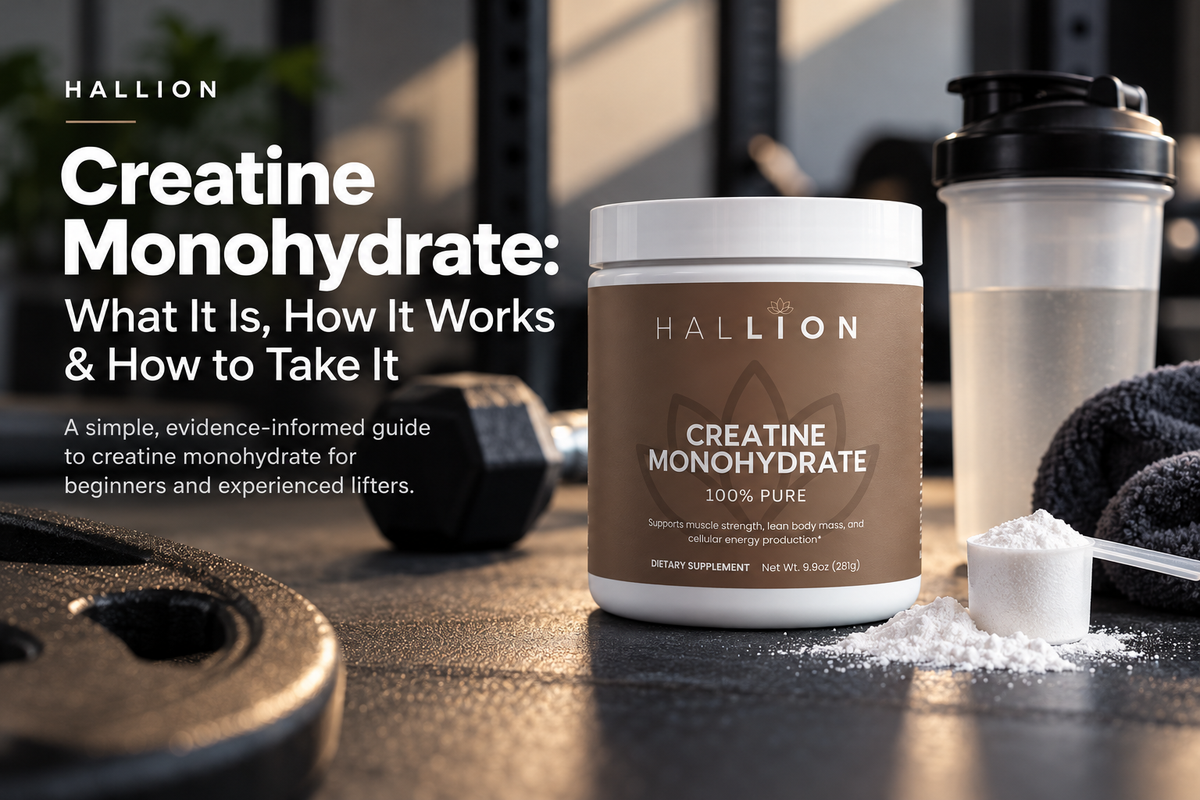
Creatine monohydrate is one of the most widely used sports nutrition supplements, but beginners often have the same questions: What does creatine actually do? How much should you take? Do you need a loading phase? And does timing matter?
This guide explains the basics of creatine monohydrate, how it fits into a training routine, and what to consider before adding it to your supplement routine.
What Is Creatine Monohydrate?
Creatine is a naturally occurring compound made from amino acids. Your body produces creatine, and you can also obtain smaller amounts through foods such as meat and fish.
Most of the body's creatine is stored in skeletal muscle, where it plays a role in the phosphocreatine energy system. Creatine monohydrate is the most established supplemental form and has been extensively studied in sports nutrition research.
What Does Creatine Do?
Your muscles use adenosine triphosphate, or ATP, as an immediate source of energy. During short, high-intensity efforts such as lifting weights or sprinting, ATP is used rapidly.
Stored phosphocreatine helps regenerate ATP. Supplementing with creatine can increase muscle creatine stores, which can help support repeated high-intensity exercise performance. Over time, improved training capacity can support strength and muscle-building goals when combined with appropriate resistance training and nutrition.
Is Creatine Only for Bodybuilders?
No. Although creatine is popular in bodybuilding, it is also used by strength athletes, recreational gym users, team-sport athletes, sprinters, and others whose training includes repeated high-intensity efforts.
Whether creatine makes sense for you depends on your goals, training style, diet, and individual circumstances.
Creatine Monohydrate vs. Other Forms of Creatine
You may see creatine hydrochloride, buffered creatine, creatine nitrate, and other forms marketed as alternatives. Creatine monohydrate remains the standard against which other forms are commonly compared because it has a large body of research behind it.
For most people looking for a straightforward creatine supplement, there is usually no need to make the choice complicated. A simple creatine monohydrate powder can be an easy way to incorporate creatine into a daily routine.
How Much Creatine Should You Take?
A commonly used maintenance amount in research and sports nutrition practice is approximately 3–5 grams of creatine monohydrate per day.
Individual needs can vary, so follow the serving directions on your supplement and consider speaking with a qualified healthcare or sports nutrition professional if you are unsure what is appropriate for you.
Do You Need to Load Creatine?
A loading phase is optional.
Some creatine protocols use approximately 20 grams per day for around five to seven days, divided into several smaller servings, followed by a lower daily maintenance amount. This approach is intended to increase muscle creatine stores more quickly.
However, taking a smaller maintenance amount consistently can also increase creatine stores over time. If simplicity is your priority, a consistent daily routine may be easier to maintain.
When Is the Best Time to Take Creatine?
For most people, consistency is more important than finding a perfect time of day. Creatine works by helping maintain elevated muscle creatine stores, so regularly taking it is the key consideration.
You can take creatine around your workout if that makes it easier to remember, or at another convenient time as part of your normal routine.
Should You Take Creatine on Rest Days?
Creatine is generally used consistently, including on days without training. Maintaining a regular daily routine helps support muscle creatine stores rather than limiting use only to workout days.
Can You Mix Creatine With Protein Powder?
Creatine monohydrate can be added to a protein shake, water, juice, or another suitable beverage. Combining creatine and protein in the same shake can be a convenient option because they serve different nutritional purposes.
Protein provides amino acids that support muscle protein synthesis and recovery, while creatine supports the energy system involved in repeated high-intensity muscular efforts.
Creatine vs. Protein: What's the Difference?
Creatine and protein are not interchangeable.
Protein provides amino acids used throughout the body and is particularly important for maintaining and building muscle when combined with resistance training.
Creatine helps support the rapid energy system used during high-intensity exercise by increasing available creatine and phosphocreatine stores in muscle.
Depending on your diet and goals, some people use both as part of the same nutrition and training plan.
Does Creatine Cause Water Weight?
An increase in body weight can occur when starting creatine. Creatine can increase water held within muscle cells, particularly as muscle creatine stores rise.
This is different from gaining body fat. The amount varies between individuals, and changes can be more noticeable when using a loading protocol.
How Long Does Creatine Take to Work?
The timeline depends partly on how you take it. A loading protocol can increase muscle creatine stores relatively quickly, while a lower daily amount typically takes longer to reach similar saturation.
Creatine should not be viewed as a stimulant that produces an immediate sensation after one serving. Its usefulness comes from consistently maintaining increased muscle creatine availability over time.
What Should You Look for When Buying Creatine?
When choosing a creatine supplement, simplicity can be an advantage. Consider a product that clearly identifies creatine monohydrate as the ingredient, provides straightforward serving information, and comes from a brand that communicates its product information clearly.
Unflavored creatine powder can also be convenient because it can be mixed into water, juice, or a shake without adding another flavor to your routine.
A Simple Creatine Routine
If you want to keep your routine uncomplicated, you can follow the serving directions for your creatine monohydrate product and take it consistently each day. Choose a time that is easy to remember, mix it thoroughly into a suitable drink, and combine supplementation with a well-structured training program, adequate protein and overall nutrition, hydration, and sufficient recovery.
Creatine Monohydrate FAQs
Should beginners take creatine?
Creatine monohydrate can be considered by healthy adults whose training and nutrition goals are compatible with its use. Beginners should first establish sound training, nutrition, hydration, and recovery habits rather than relying on any supplement as a substitute for those fundamentals.
Do I have to cycle creatine?
Routine cycling is not generally necessary simply because you have been taking creatine for a certain number of weeks. Follow product directions and seek individualized professional advice where appropriate.
Can women take creatine?
Creatine is not a male-only supplement. Research on creatine includes both men and women, although individual goals and circumstances vary.
Can I take creatine without working out?
Creatine can still increase creatine stores without a workout immediately following the serving, but many of the performance and body-composition goals associated with creatine depend on an appropriate training program.
Does creatine contain protein?
No. Creatine is not a protein powder and does not replace dietary protein.
The Bottom Line
Creatine monohydrate is a well-established sports nutrition ingredient that can support repeated high-intensity exercise performance when used consistently. A daily routine is generally more important than obsessing over exact timing, and a loading phase is optional rather than mandatory.
If you want a straightforward way to add creatine to your training routine, explore Hallion Creatine Monohydrate, an unflavored powder designed for simple daily use. Follow the product serving directions and combine it with appropriate training, nutrition, hydration, and recovery.
This article is for general educational purposes and is not medical advice. Supplements are not a substitute for a varied diet or healthy lifestyle. If you are pregnant, nursing, taking medication, have a medical condition, or have questions about whether creatine is appropriate for you, consult a qualified healthcare professional.


Leave a comment
This site is protected by hCaptcha and the hCaptcha Privacy Policy and Terms of Service apply.