


Magnesium is an essential mineral involved in hundreds of processes throughout the body. It contributes to normal muscle and nerve function and is naturally found in foods including leafy green vegetables, nuts, seeds, legumes, and whole grains.
But when shopping for a magnesium supplement, you quickly discover that magnesium comes in several different forms. One you are particularly likely to encounter is magnesium glycinate.
So what is magnesium glycinate, why do people take it, and does it really deserve a place in your nighttime routine?
What Is Magnesium Glycinate?
Magnesium glycinate is magnesium bound to the amino acid glycine. You may also see the closely related term magnesium bisglycinate used on supplement labels and in research.
The important thing to remember is that magnesium is the essential mineral. The different names on supplement bottles refer to the compounds used to deliver that magnesium.
Rather than choosing a supplement based purely on marketing claims, look at the amount of elemental magnesium provided per serving and follow the directions on the specific product you use.
What Does Magnesium Do?
Magnesium is involved in a wide range of normal physiological functions, including muscle and nerve function and numerous enzyme-driven processes. Recommended magnesium intake also varies by age and sex, which is one reason there is no single amount that's right for everyone.
Food should remain an important source of magnesium. Good dietary sources include nuts, seeds, whole grains, legumes and leafy green vegetables. Dietary supplements can complement a diet when appropriate rather than replace nutritious foods.
Why Is Magnesium Glycinate So Popular?
One reason is convenience. Capsules provide a straightforward way of incorporating a measured amount of magnesium into a daily routine.
Magnesium glycinate has also become closely associated online with evening wellness and sleep routines. That's where it's particularly important to separate what magnesium does physiologically from what supplement marketing sometimes promises.
Does Magnesium Glycinate Help You Sleep?
This deserves a careful answer.
Research into magnesium and sleep is continuing, but magnesium should not be presented as a proven treatment for insomnia.
Some individual clinical research has reported modest improvements in certain sleep-related outcomes, while broader reviews have found inconsistent evidence. For that reason, magnesium glycinate is better viewed as a source of an essential mineral rather than as a sleeping pill or treatment for insomnia.
When Should You Take Magnesium Glycinate?
There isn't one universal time when everyone needs to take magnesium.
Some people prefer taking it in the evening because it fits conveniently into their nighttime routine. Others prefer taking supplements alongside a meal or at another consistent point during the day.
Unless your product directions or healthcare professional advise otherwise, consistency and following the supplement's serving instructions are generally more useful considerations than chasing a supposedly perfect minute of the day.
Can You Take Magnesium Glycinate Every Day?
Magnesium is an essential nutrient, but more is not automatically better.
Your total magnesium intake can come from both food and supplements, so pay attention to the amount of elemental magnesium in your supplement rather than simply counting capsules.
People with health conditions or those taking medications should discuss supplementation with a qualified healthcare professional, since magnesium supplements can interact with some medicines and may not be appropriate for everyone.
Magnesium Glycinate vs. Other Forms of Magnesium
You'll encounter several forms when shopping for magnesium, including magnesium citrate, oxide and glycinate.
They aren't necessarily interchangeable on a gram-for-gram basis because magnesium compounds contain different proportions of elemental magnesium and may be formulated for different uses.
Rather than assuming the form with the biggest number on the front of the bottle is best, check the Supplement Facts panel and serving directions.
How Much Magnesium Do You Need?
Magnesium requirements vary according to factors including age and sex. U.S. recommended dietary allowances for adults generally fall between 310 and 420 mg per day, depending on the individual. These recommendations concern total magnesium intake and should not be confused with a recommendation to obtain that entire amount from a supplement.
That's another reason to consider your overall diet when deciding whether supplementation makes sense.
What Should You Look for in a Magnesium Supplement?
Start with the basics: identify the form of magnesium, check the amount of elemental magnesium per serving, read the complete ingredient list, and follow the manufacturer's directions.
Avoid choosing a product solely because it makes dramatic promises about sleep, stress or recovery. Supplements work best as one component of a broader wellness routine rather than as a substitute for good nutrition, movement and sleep habits.
A Simple Evening Wellness Routine
If evening is the easiest time for you to remember your magnesium, build it into a repeatable routine.
Eat a balanced evening meal, reduce unnecessary late-night stimulation, establish a reasonably consistent bedtime, and take your supplement according to its label directions.
Hallion's Magnesium Glycinate provides 275 mg of elemental magnesium per serving and is designed as a convenient addition to a daily wellness or nighttime routine.
Explore Hallion Magnesium Glycinate →
Magnesium Glycinate FAQs
Is magnesium glycinate the same as magnesium?
Magnesium glycinate is a form of supplemental magnesium in which magnesium is combined with glycine.
Is magnesium glycinate only for nighttime?
No. Although many people associate it with evening routines, magnesium is an essential mineral rather than a nighttime-only nutrient.
Can magnesium glycinate replace magnesium-rich foods?
It shouldn't be viewed that way. Foods such as nuts, seeds, legumes, whole grains and leafy green vegetables can contribute magnesium along with many other nutrients.
Is magnesium glycinate proven to cure insomnia?
No. Research into magnesium and sleep remains mixed, and magnesium supplements should not be presented as a treatment or cure for insomnia.
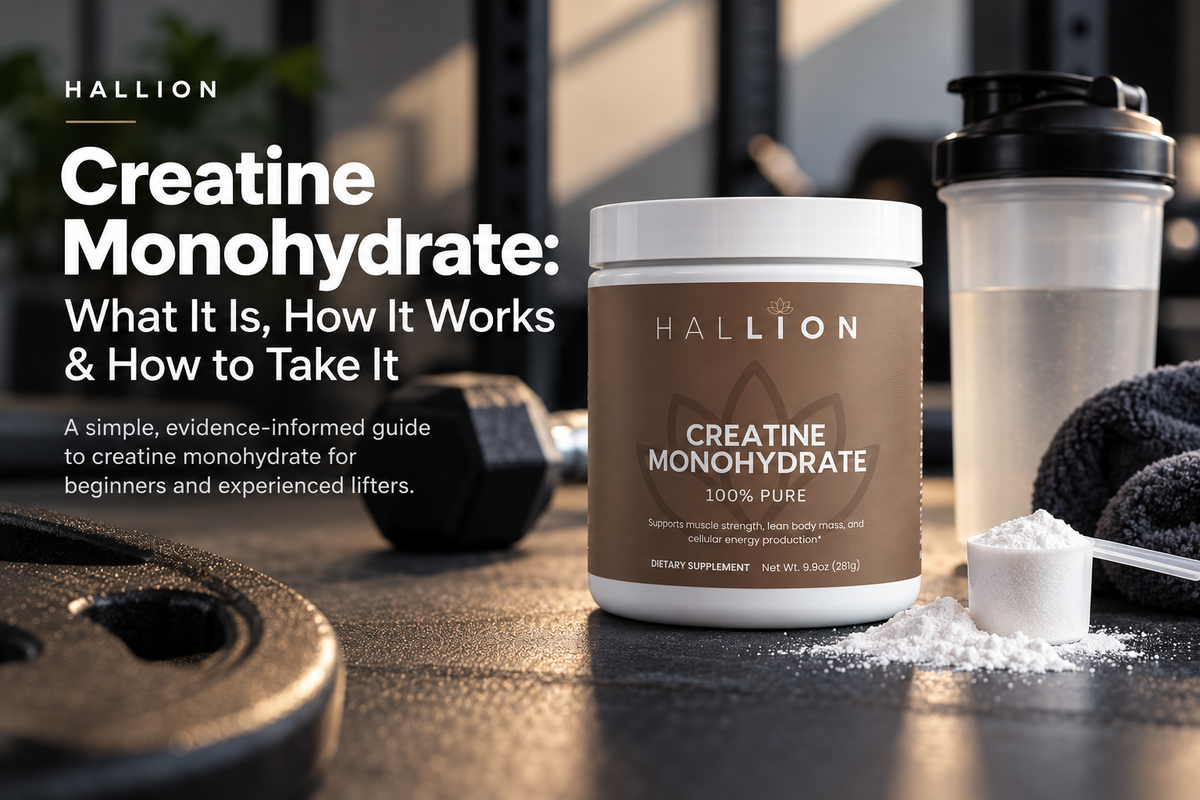
Should I take magnesium glycinate with creatine?
They serve very different purposes, and taking one doesn't inherently require taking the other. Your supplement routine should be based on your nutritional needs, diet, training and individual circumstances.
The Bottom Line
Magnesium glycinate offers a convenient way to supplement an essential mineral involved in normal muscle, nerve and many other physiological functions.
Its popularity as part of nighttime routines has generated plenty of claims about sleep, but the science calls for a measured message. Some research is promising, yet magnesium should not be treated as an insomnia remedy.
If magnesium supplementation fits your nutrition and wellness routine, Hallion Magnesium Glycinate provides a straightforward capsule option that can be taken according to its serving directions.
This article is for general educational purposes and is not medical advice. Dietary supplements are not intended to diagnose, treat, cure or prevent disease. If you are pregnant or nursing, take medication, have a medical condition, or are unsure whether magnesium supplementation is appropriate for you, speak with a qualified healthcare professional.

Leave a comment
This site is protected by hCaptcha and the hCaptcha Privacy Policy and Terms of Service apply.